
Kartik Parikrama: Walking Around Ayodhya
The Chaudah Kosi and Panch Kosi Parikrama and Kartik Purnima bath in Ayodhya: routes, dates, meaning and how to prepare for the long barefoot walk.

What it is
Parikrama means walking around something sacred, keeping it on one's right, as one walks around the sanctum of a temple. In the month of Kartik, soon after Diwali, pilgrims treat the whole of Ayodhya as the sanctum and walk around it. The Kartik fair is one of the largest gatherings of the year here, drawing villagers from across Awadh and eastern Uttar Pradesh in very great numbers.
The three main observances
- Chaudah Kosi Parikrama. On Akshaya Navami, the ninth day of the bright half of Kartik, devotees walk a circuit of fourteen kos, about 42 km, around the twin towns of Ayodhya and the former Faizabad. Most begin at night at an auspicious hour announced each year and finish within a day.
- Panch Kosi Parikrama. Two days later, on Devotthan Ekadashi, comes the shorter circuit of five kos, about 15 km, around the core of the temple town. It is the one most suited to first-time visitors and older pilgrims.
- Kartik Purnima. On the full moon, pilgrims bathe in the Saryu before sunrise, and the fair concludes.
A much longer Chaurasi Kosi Parikrama of eighty-four kos, taking about three weeks and touching several districts, is undertaken by sadhus and determined pilgrims at another time of year, beginning in the month of Chaitra or Vaishakh.
The meaning
The logic is that of a pilgrimage made with the feet rather than the eyes. Walking the boundary takes in every shrine, pond and grove inside it, known and unknown, so nothing is left out. It is also a great leveller: rich and poor walk the same road barefoot, eat at the same roadside kitchens run by volunteers, and call out the same name. Many families walk in fulfilment of a vow or in thanks for a prayer answered. On this same Ekadashi the sanctum of Treta ke Thakur is traditionally opened.
If you want to walk
- Check the exact date and starting time for your year; they are announced by the district administration.
- Start with the Panch Kosi unless you are used to long walks. Forty-two kilometres barefoot on a hard road is severe on the feet.
- The custom is to walk barefoot, but those with diabetes or foot problems should wear soft footwear or thick socks; no one will object.
- Walk at night and in the early morning, keep a steady pace, and rest at the camps along the route where volunteers offer water, tea, food and first aid.
- Carry very little: water, a shawl, a torch, some glucose and plasters.
- Walk on the correct side as marshalled, stay with your group, and keep a card with a phone number on every child and elder.
- If you feel faint or your feet blister badly, stop. Medical camps and ambulances are stationed on the route; in an emergency call 108.
If you only want to see it
The city is extremely crowded on these three days and traffic is diverted. If your aim is a calm darshan, choose other dates; see Best time to visit Ayodhya. If you do come, stay near the temple area so that you can move on foot, and read Safety tips for pilgrims.
Timings, entry rules, routes and prices change, especially on festival days. Please confirm with the temple, the district administration or the provider before you travel.
Last updated:
Read next
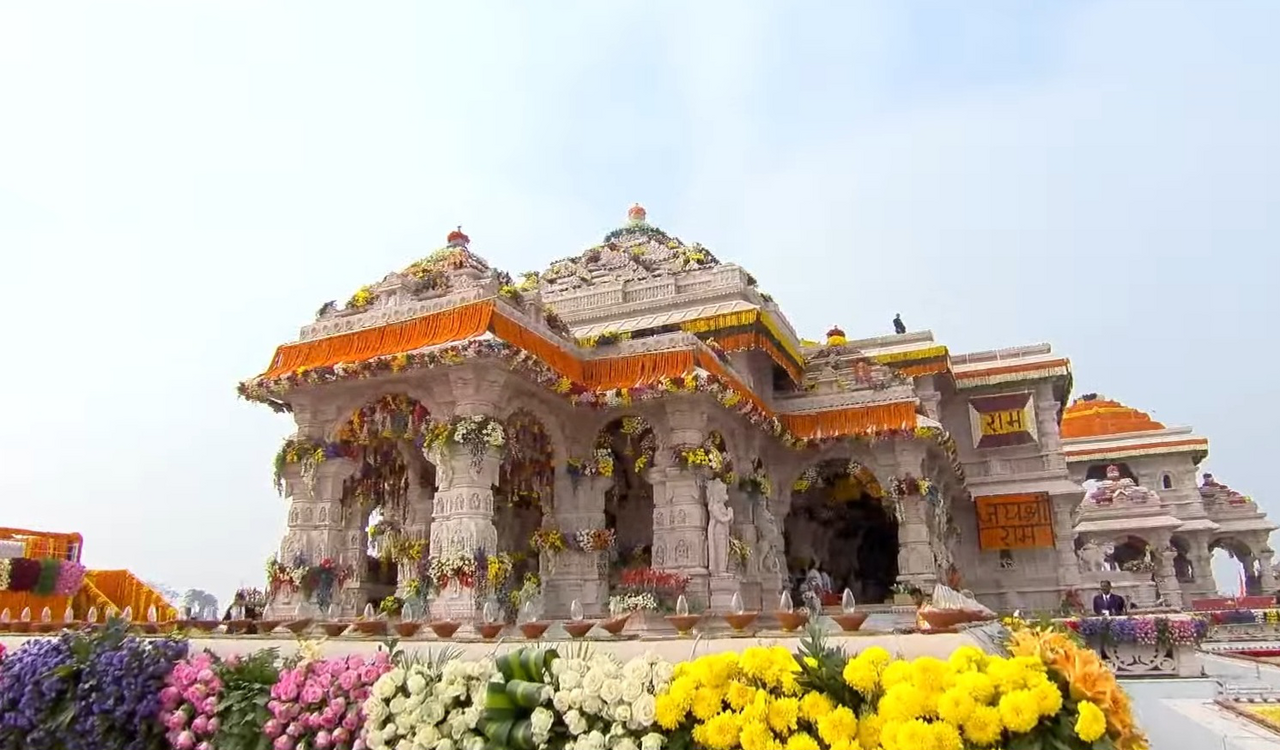
Shri Ram Janmabhoomi Mandir, Ayodhya
The temple at the birthplace of Shri Ram in Ayodhya: its story, architecture, the idol of Ram Lalla, how darshan works and practical tips for visitors.

Bharat Kund, Nandigram: Where Bharata Waited
Bharat Kund at Nandigram, near Ayodhya, is where Bharata is believed to have lived as an ascetic for fourteen years, ruling in the name of Ram's sandals.

Lata Mangeshkar Chowk and the Giant Veena
Lata Mangeshkar Chowk near Naya Ghat in Ayodhya is a landmark crossing with a 40-foot veena honouring the singer of countless Ram bhajans.

Ram Mandir Darshan Guide: Step by Step
How darshan at Shri Ram Janmabhoomi Mandir in Ayodhya works: entry, lockers, what not to carry, the queue, aarti passes, dress, elders and common scams.

Best Time to Visit Ayodhya: Month by Month
When to visit Ayodhya: weather in each season, festival dates that bring huge crowds, fog and heat warnings, and the calmest weeks for darshan.

Safety Tips for Pilgrims in Ayodhya
Staying safe in Ayodhya: crowds, lost family members, river bathing, heat and cold, food and water, transport fares, online fraud and who to call.