
Shri Ram Janmabhoomi Mandir, Ayodhya
The temple at the birthplace of Shri Ram in Ayodhya: its story, architecture, the idol of Ram Lalla, how darshan works and practical tips for visitors.
The place
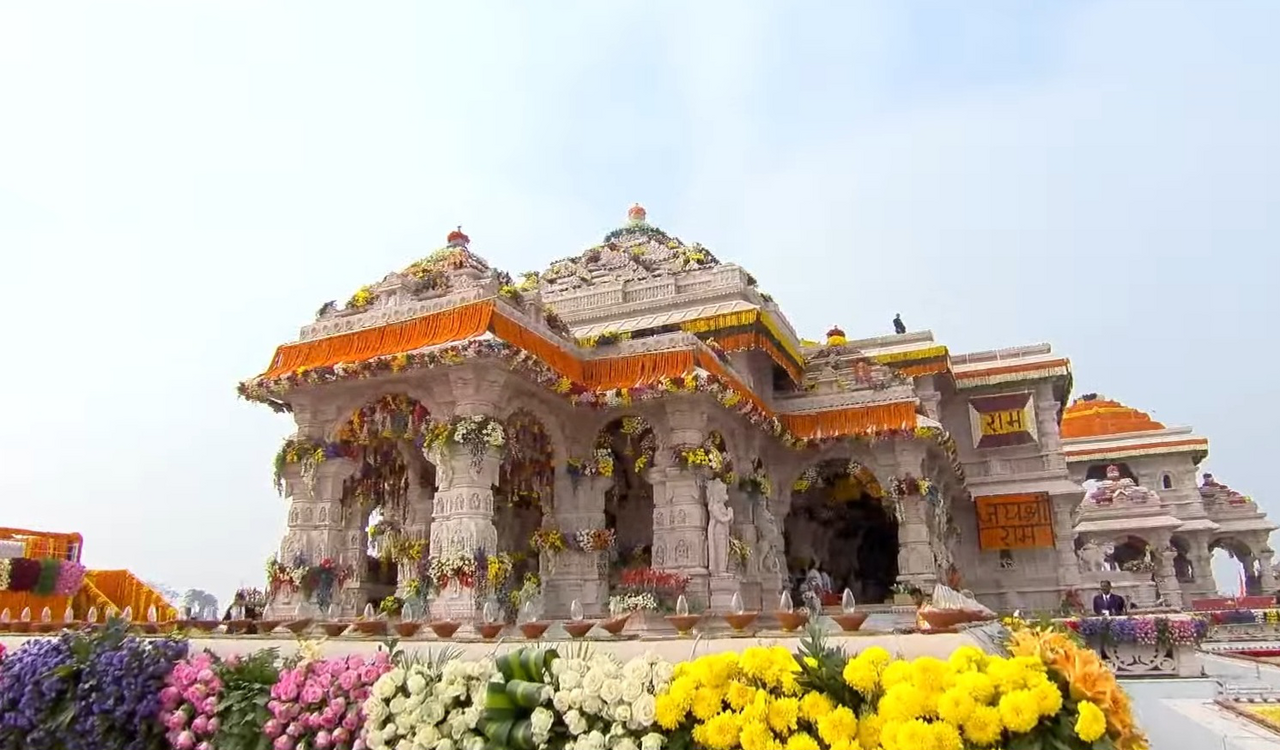
Shri Ram Janmabhoomi is the spot in the Ramkot area of Ayodhya that Hindu tradition reveres as the birthplace of Shri Ram, where Queen Kaushalya gave birth to him as told in the Bala Kanda. For devotees it is the heart of Ayodhya, and the city's other shrines are understood in relation to it.
How the temple came to be
The site was the subject of a long legal dispute, which the Supreme Court of India decided on 9 November 2019, directing that a trust be formed to build a temple there. The Government of India constituted the Shri Ram Janmbhoomi Teerth Kshetra trust in February 2020. The foundation ceremony was held on 5 August 2020, and the Pran Pratishtha, the consecration of the idol of Ram Lalla, took place on 22 January 2024. Work on the upper floors and the surrounding complex continued afterwards, and a ceremonial flag was raised on the spire in November 2025 to mark the completion of the main temple.
Architecture
The temple is built in the Nagara style of north India to a design by the Sompura family of temple architects. Published figures from the trust give it a length of about 380 feet, a width of about 250 feet and a height of about 161 feet, on three floors, with 392 carved pillars and 44 doors. It is made of pink sandstone from Rajasthan fitted without iron, so that it may stand for centuries. The main entrance faces east. Five halls lead towards the sanctum.
The idol of Ram Lalla
In the sanctum stands Ram Lalla, Shri Ram as a five-year-old child, 51 inches tall, carved from dark stone by the sculptor Arun Yogiraj of Mysuru. The first floor houses the Ram Darbar: Ram with Sita, his brothers and Hanuman.
Darshan: what to know
- Darshan is free. No person or website can sell you entry or a place in the queue.
- By long tradition, visit Hanuman Garhi first.
- Phones, cameras, electronic items, bags and leather goods are not allowed. Deposit them at the lockers at the pilgrim facilitation centre and keep the token carefully.
- The walk from the entry point is long. Wheelchairs and help for elders are available at the facilitation centre.
- Aarti passes, where offered, are issued only by the trust. Check its official website, srjbtkshetra.org, for current timings and passes.
- Early morning on a weekday is usually the calmest time. Festival days such as Ram Navami draw very large crowds.
Full step-by-step help is in our Ram Mandir darshan guide. Nearby: Kanak Bhawan, Dashrath Mahal and Sita ki Rasoi.
Timings, entry rules, routes and prices change, especially on festival days. Please confirm with the temple, the district administration or the provider before you travel.
Last updated:
Read next

How to Reach Ayodhya by Air, Train and Road
Reaching Ayodhya: the airport, the two railway stations, road distances from Lucknow, Varanasi, Prayagraj and Gorakhpur, and getting around the city.
Ayodhya Two-Day Itinerary
Two unhurried days in Ayodhya: the main temples and Saryu aarti on day one; Guptar Ghat, Nandigram, Suraj Kund and Mani Parvat on day two.
Where to Stay in Ayodhya: Areas and Options
Choosing where to stay in Ayodhya: dharamshalas, guest houses, homestays and hotels, which area suits you, booking tips and how to avoid fake bookings.
Deepotsav Ayodhya: The Festival of Lamps
Deepotsav in Ayodhya, on the eve of Diwali, relives the return of Shri Ram with millions of lamps at Ram ki Paidi. Meaning, programme and how to attend.
Sawan Jhula Mela: The Swing Festival
The Sawan Jhula Mela of Ayodhya: in the monsoon month of Shravan, Ram and Sita are placed on decorated swings in temples across the city for a fortnight.

Vivah Panchami: Wedding of Ram and Sita
Vivah Panchami marks the wedding of Shri Ram and Sita on Margashirsha Shukla Panchami. How Ayodhya celebrates with the Ram Barat, and what it means.