
Deepotsav Ayodhya: The Festival of Lamps
Deepotsav in Ayodhya, on the eve of Diwali, relives the return of Shri Ram with millions of lamps at Ram ki Paidi. Meaning, programme and how to attend.
What it celebrates
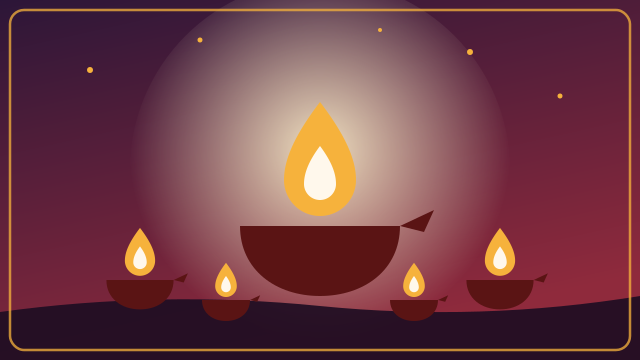
Diwali is, at its root, Ayodhya's own festival. When Shri Ram returned after fourteen years of exile and the war in Lanka, the Yuddha Kanda says the people decorated the city and lit rows of lamps to welcome him home. Every Diwali lamp lit anywhere in the world remembers that night. Deepotsav, "the festival of lamps", is the city reliving it on the same ground.
What happens
In its present large-scale form Deepotsav has been organised by the Government of Uttar Pradesh since 2017 on the evening before Diwali.
- The lamps. Tens of thousands of volunteers, many of them students, lay out earthen diyas in patterns on every step of Ram ki Paidi and the neighbouring ghats, fill them with oil and light them together at dusk. The count has grown each year and has passed two million, repeatedly setting a world record for the largest display of oil lamps.
- The homecoming. Artists playing Ram, Sita and Lakshmana arrive in a ceremonial "Pushpaka Vimana" and are received as the people of Ayodhya received them, followed by a symbolic coronation.
- Shobha yatra. A procession of tableaux on scenes from the Ramayana moves through the city during the day.
- Ramlila and culture. Troupes from different Indian states and from countries with their own Ramayana traditions perform.
- Saryu aarti, laser show and fireworks close the evening.
The meaning
A lamp is small; darkness is driven out only when many are lit together. The people of Ayodhya had waited fourteen years, governed by a pair of sandals. The festival is about faithful waiting rewarded, and about a community's joy when a good ruler returns. Read Ram Rajya: leadership as service.
How to attend
- Dates follow the lunar calendar; check them for your year and book rooms a month or more ahead.
- Entry to the ghats is regulated, with separate enclosures and passes for some areas. Follow the district administration's announcements for the public viewing points.
- Vehicles are stopped well outside the area. Arrive by mid-afternoon, wear comfortable shoes and expect to walk.
- The lamps are lit around sunset and burn for an hour or two. Much of the city, including the temples, is illuminated, so there is a great deal to see even away from the main venue.
- Keep children close, fix a meeting point, and be careful near lamps and open flames with loose clothing.
- Stay on for Diwali itself and the days after, which lead into the Kartik Parikrama.
Also see Safety tips for pilgrims.
Timings, entry rules, routes and prices change, especially on festival days. Please confirm with the temple, the district administration or the provider before you travel.
Last updated:
Read next
Sita ki Rasoi: The Kitchen of Sita
Sita ki Rasoi near the Janmabhoomi in Ayodhya is revered as the kitchen where the new bride Sita first cooked. Its meaning and the Annapurna tradition.

Suraj Kund: The Pond of the Sun
Suraj Kund at Darshan Nagar near Ayodhya is an old stepped pond and Sun temple linked with the Suryavanshi kings, the solar ancestors of Shri Ram.

Lata Mangeshkar Chowk and the Giant Veena
Lata Mangeshkar Chowk near Naya Ghat in Ayodhya is a landmark crossing with a 40-foot veena honouring the singer of countless Ram bhajans.
How to Reach Ayodhya by Air, Train and Road
Reaching Ayodhya: the airport, the two railway stations, road distances from Lucknow, Varanasi, Prayagraj and Gorakhpur, and getting around the city.
Ayodhya Two-Day Itinerary
Two unhurried days in Ayodhya: the main temples and Saryu aarti on day one; Guptar Ghat, Nandigram, Suraj Kund and Mani Parvat on day two.
Visiting Ayodhya from Abroad: A First-Timer's Guide
Planning Ayodhya from outside India: visa, which airport to fly into, money, SIM cards, language, food, health and the paperwork hotels will ask for.