
Saryu Ghat and the Evening Aarti
The Saryu river at Naya Ghat, Ayodhya: why the river is sacred, the evening aarti, boat rides, the ghats to see and safety advice for bathing.
The river
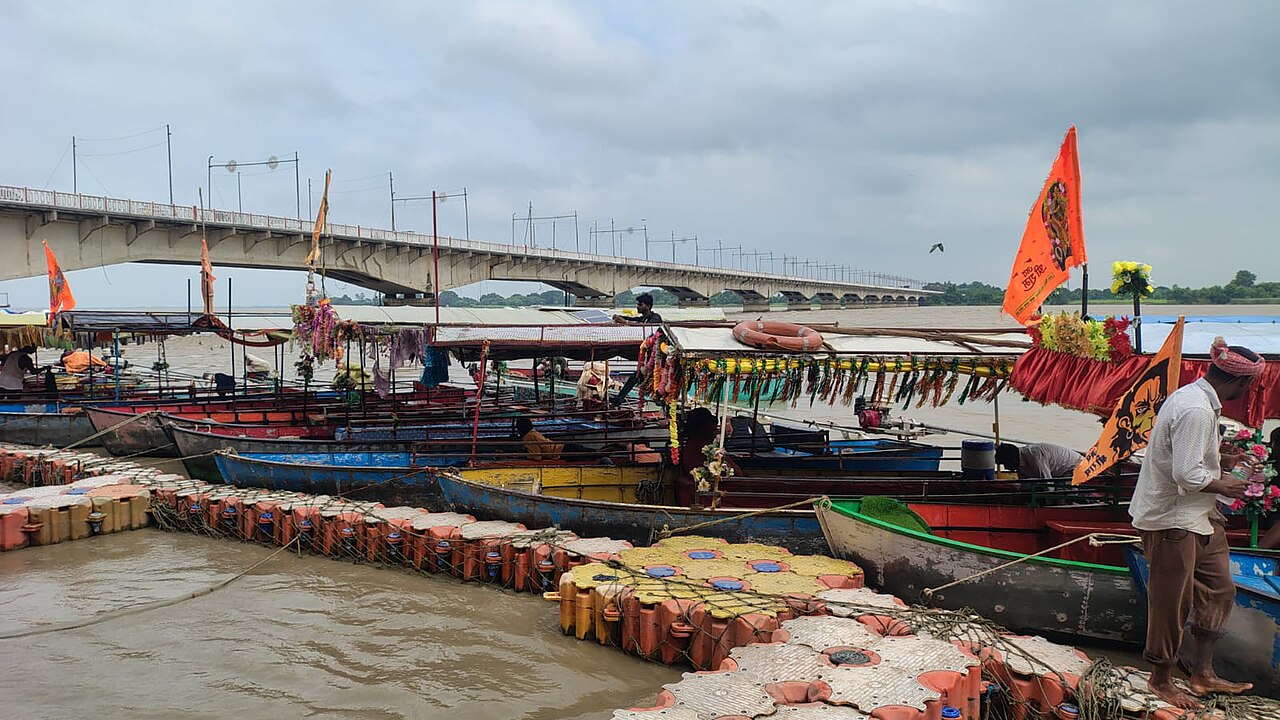
Ayodhya exists because of the Saryu. The Ramayana's first description of the city places it on this river's bank, and the river is present at the beginning and the end of Ram's life: King Dasharatha performed his sacrifice on its northern shore, and Ram, his work done, walked into its waters at Guptar Ghat. Tradition describes the Saryu as rising from Lake Manasarovar in the Himalayas. For the people of Ayodhya she is a mother, addressed as Saryu Maiya.
The ghats
Naya Ghat is the main riverfront near the old town, with a broad paved promenade. Close by are Lakshman Ghat, named for Lakshmana, and the area known as Swargdwar, "the gate of heaven", an old cluster of temples and bathing places. Ram ki Paidi is a few minutes' walk inland.
The evening aarti
Every evening at about sunset priests offer aarti to the river with tall brass lamps, incense, conch and bells while devotees sing. It lasts roughly half an hour. Arrive 20 to 30 minutes early for a place on the steps; there is no charge. Many pilgrims float a small leaf-boat with a lamp and flowers afterwards.
The logic of the custom
Why worship a river? The practical answer is older than any temple: a city lives by its water, and a people who are taught to bow to a river are less likely to foul it. The devotional answer is gratitude. The aarti is a daily thank-you to what sustains life.
Boat rides
Boatmen offer short rides that give a fine view of the ghats and, at dusk, of the aarti from the water. Agree the fare before boarding, insist on a life jacket, and avoid overloaded boats.
Bathing safely
- Bathe only at built ghats, within the chains and railings.
- The current is strong and the bed uneven, especially from July to September.
- Do not let children or non-swimmers go beyond knee depth.
- Change at the facilities provided, and keep valuables with someone on the bank.
More in Safety tips for pilgrims and the helpline page.
Timings, entry rules, routes and prices change, especially on festival days. Please confirm with the temple, the district administration or the provider before you travel.
Last updated:
Read next
How to Reach Ayodhya by Air, Train and Road
Reaching Ayodhya: the airport, the two railway stations, road distances from Lucknow, Varanasi, Prayagraj and Gorakhpur, and getting around the city.
Visiting Ayodhya from Abroad: A First-Timer's Guide
Planning Ayodhya from outside India: visa, which airport to fly into, money, SIM cards, language, food, health and the paperwork hotels will ask for.
Temple Etiquette in Ayodhya for First-Time Visitors
What to wear, where to leave your shoes, what darshan, prasad and aarti mean, when not to take photographs, and how to behave in Ayodhya's temples.

Deepotsav Ayodhya: The Festival of Lamps
Deepotsav in Ayodhya, on the eve of Diwali, relives the return of Shri Ram with millions of lamps at Ram ki Paidi. Meaning, programme and how to attend.
Sawan Jhula Mela: The Swing Festival
The Sawan Jhula Mela of Ayodhya: in the monsoon month of Shravan, Ram and Sita are placed on decorated swings in temples across the city for a fortnight.
Kartik Parikrama: Walking Around Ayodhya
The Chaudah Kosi and Panch Kosi Parikrama and Kartik Purnima bath in Ayodhya: routes, dates, meaning and how to prepare for the long barefoot walk.