
Visiting Ayodhya from Abroad: A First-Timer's Guide
Planning Ayodhya from outside India: visa, which airport to fly into, money, SIM cards, language, food, health and the paperwork hotels will ask for.
Who this guide is for
More and more visitors now come to Ayodhya from outside India: families of Indian origin bringing children to see the birthplace of Shri Ram, followers of the Ramayana tradition from Nepal, Southeast Asia, the Caribbean, Mauritius and Fiji, and travellers who are simply curious. This page covers what is different when you arrive from another country. For what to see, start with Places to visit in Ayodhya.
Visa
Almost every foreign national needs a visa for India. Citizens of a large number of countries can apply online for an e-Visa before travelling; others must apply through an Indian embassy or visa centre. Holders of an OCI card do not need a visa.
- Apply only on the Government of India's official visa website, indianvisaonline.gov.in. Many look-alike sites charge extra or are fraudulent.
- Apply well ahead of your flight, check that your passport has enough validity and blank pages, and carry a printout of the approval.
- Rules, fees and permitted lengths of stay differ by nationality and change from time to time, so read the official page rather than relying on a blog, including this one.
Which airport
Ayodhya has its own airport, Maharishi Valmiki International Airport, about 10 km from the temples. At present its flights are mostly domestic, so most overseas visitors fly into a large Indian gateway first and connect.
- Delhi: the widest choice of international flights; connect to Ayodhya by a domestic flight or an overnight or fast day train.
- Lucknow: the nearest big airport, about three hours from Ayodhya by road.
- Varanasi: useful if you plan to see Varanasi and Ayodhya together.
Details are in How to reach Ayodhya.
Money
The currency is the Indian rupee. Hotels and larger shops usually accept international cards, but small eateries, e-rickshaws, flower sellers and temple shops expect cash or Indian mobile payments. Withdraw rupees from a bank ATM at the airport or in the city, and keep small notes. Change money only at banks or authorised counters. Temple darshan itself costs nothing.
Phone and internet
A local SIM makes travel much easier. Foreign visitors can buy one at counters in major airports or at operator stores with a passport, visa and a photograph; activation can take a few hours. Mobile data is inexpensive and coverage in Ayodhya is good. Remember that phones cannot be taken inside Shri Ram Janmabhoomi Mandir; see the darshan guide.
Language
Hindi and the local Awadhi are spoken everywhere. Hotel staff, many guides and younger people speak English; drivers and shopkeepers may not. A few words go a long way: "namaste" as a greeting, "dhanyavaad" for thank you, "kitna?" for how much. Signs on the main routes are in Hindi and English. If you would like someone to explain the places in English or another language, request a guided tour.
Food and water
Food in the temple town is vegetarian, and alcohol is not served or sold there. Eat freshly cooked hot food, peel fruit yourself, and drink sealed bottled water or water you know to be filtered. Tell the kitchen if you want food "less spicy".
Health
- Buy travel insurance that covers medical care.
- Bring your regular medicines in their original packs with a prescription.
- Ask your doctor about recommended vaccinations for India well before you travel.
- From April to June the heat is severe; from late December to January the mornings are cold and foggy. See Best time to visit Ayodhya.
Hotels and documents
Indian law requires hotels to record the passport and visa details of foreign guests, so keep the originals with you at check-in and carry photocopies and digital copies separately. Book places that confirm they accept foreign nationals. See Where to stay in Ayodhya.
Safety
Ayodhya is heavily policed and used to pilgrims. The ordinary precautions apply: agree fares in advance, keep valuables out of sight, and ignore anyone offering paid "VIP darshan". Emergency help is on 112, and the Ministry of Tourism's multilingual tourist helpline is 1363. All numbers are on the helpline page.
Next: Temple etiquette for first-time visitors and a five-day Ayodhya, Varanasi and Prayagraj circuit.
Timings, entry rules, routes and prices change, especially on festival days. Please confirm with the temple, the district administration or the provider before you travel.
Last updated:
Read next
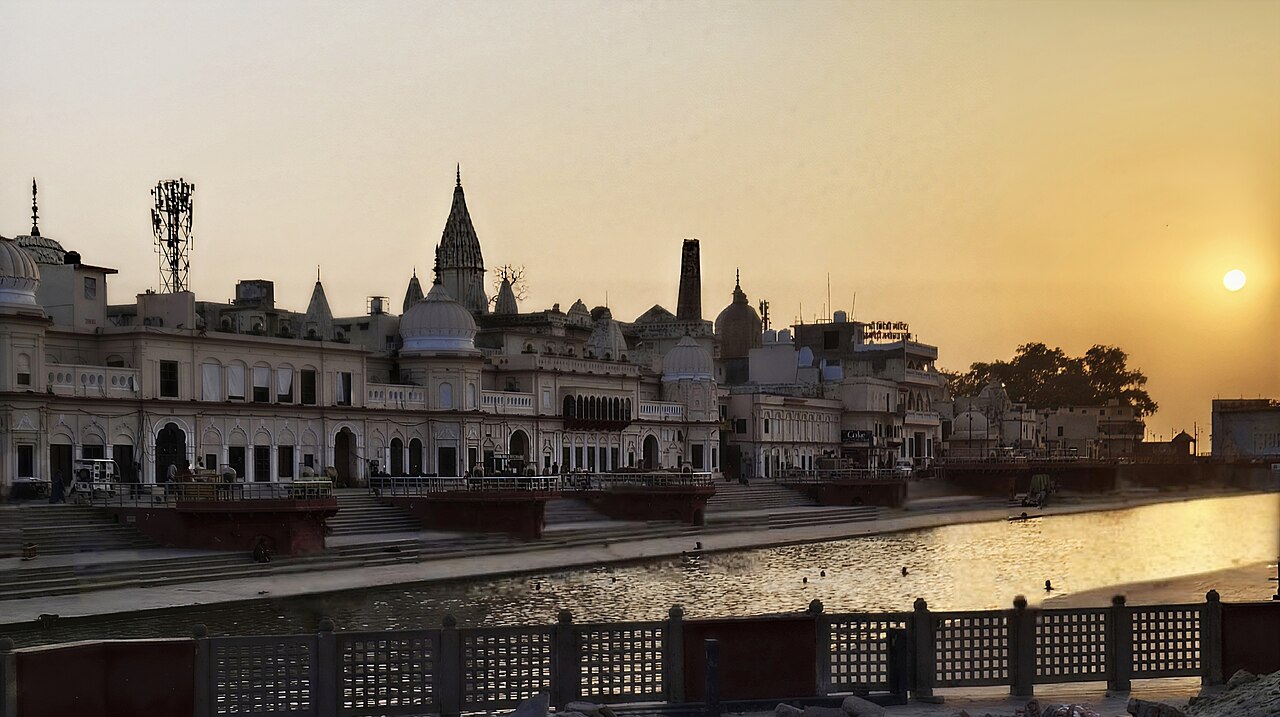
Ram ki Paidi: The Ghats of a Million Lamps
Ram ki Paidi is the long line of bathing ghats beside the Saryu in Ayodhya, home of the Deepotsav lamp festival. What to see and the best time to go.

Tulsi Smarak Bhawan: Memorial to Tulsidas
Tulsi Smarak Bhawan in Ayodhya honours Goswami Tulsidas, author of the Ramcharitmanas, with a research institute, Ramlila and a Ram Katha museum.

Suraj Kund: The Pond of the Sun
Suraj Kund at Darshan Nagar near Ayodhya is an old stepped pond and Sun temple linked with the Suryavanshi kings, the solar ancestors of Shri Ram.
Ram Navami in Ayodhya: Birthday of Shri Ram
Ram Navami, the birth festival of Shri Ram on Chaitra Shukla Navami: its meaning, how Ayodhya celebrates at noon, the Surya Tilak, and crowd planning.
Sawan Jhula Mela: The Swing Festival
The Sawan Jhula Mela of Ayodhya: in the monsoon month of Shravan, Ram and Sita are placed on decorated swings in temples across the city for a fortnight.
Vivah Panchami: Wedding of Ram and Sita
Vivah Panchami marks the wedding of Shri Ram and Sita on Margashirsha Shukla Panchami. How Ayodhya celebrates with the Ram Barat, and what it means.