
Ayodhya Two-Day Itinerary
Two unhurried days in Ayodhya: the main temples and Saryu aarti on day one; Guptar Ghat, Nandigram, Suraj Kund and Mani Parvat on day two.
Why two days
One day is enough for darshan. Two days let you understand the city: the beginning of Ram's story in the old town on the first day, and its wider circle, the exile, the waiting and the farewell, on the second. It also means you are not rushing elders through queues.
Day one: the heart of Ayodhya
Follow the one-day plan at an easy pace:
- Sunrise at the Saryu.
- Hanuman Garhi, then Shri Ram Janmabhoomi Mandir.
- Dashrath Mahal, Kanak Bhawan and Sita ki Rasoi.
- Rest through the afternoon.
- Sunset at Ram ki Paidi, Nageshwarnath Temple and the Saryu aarti.
Because you have tomorrow, you can spend longer in each place, and return to the Ram Mandir in the evening when it is lit if you wish.
Day two: the wider circle
Hire a taxi or auto for the day and agree the route and price before starting.
Morning: Guptar Ghat
Drive to Guptar Ghat, where Ram is believed to have entered the Saryu at the end of his life on earth. It is quiet and beautiful in the early light. Take a short boat ride if you like.
Late morning: Suraj Kund
Return through the city and continue to Suraj Kund, the pond of the Sun, ancestor of the Raghukul.
Midday: Nandigram
Carry on to Bharat Kund at Nandigram, where Bharata is believed to have ruled for fourteen years as the servant of Ram's sandals. Eat before or after; facilities at the site are basic.
Afternoon: Mani Parvat and Tulsi Smarak
Back in the city, climb Mani Parvat for the view, then visit Tulsi Smarak Bhawan.
Evening: free
Shop for prasad, tulsi malas and books near Hanuman Garhi, see Lata Mangeshkar Chowk lit up, or attend the aarti again.
Reading for the journey
The places make more sense with their stories. On the first evening read the Bala Kanda and Ayodhya Kanda; before Nandigram read about Bharata; before Guptar Ghat read the Uttara Kanda.
A third day
Go on to Chitrakoot, Prayagraj or Varanasi; see How to reach Ayodhya. To have everything arranged with a guide, request a guided tour. Taxis are listed in the directory.
Timings, entry rules, routes and prices change, especially on festival days. Please confirm with the temple, the district administration or the provider before you travel.
Last updated:
Read next
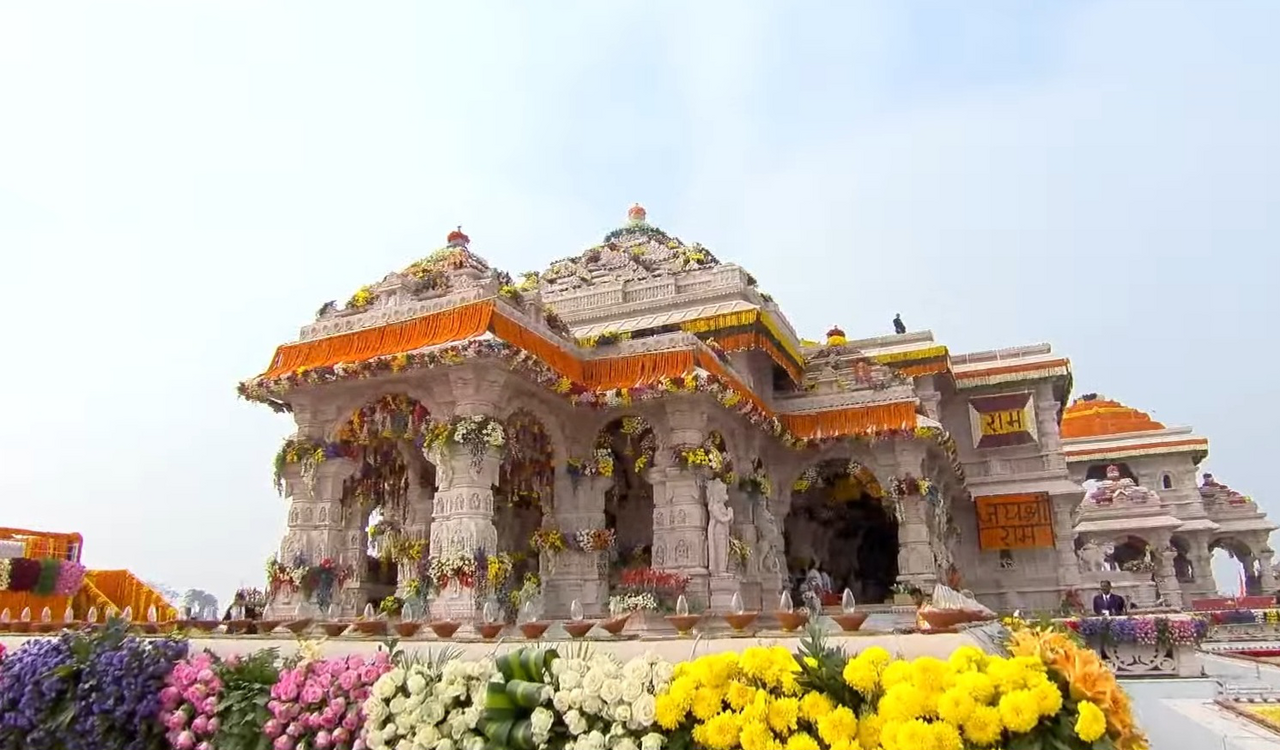
Shri Ram Janmabhoomi Mandir, Ayodhya
The temple at the birthplace of Shri Ram in Ayodhya: its story, architecture, the idol of Ram Lalla, how darshan works and practical tips for visitors.

Treta ke Thakur: Site of the Ashwamedha Yajna
Treta ke Thakur near Naya Ghat, Ayodhya, is believed to mark where Shri Ram performed the Ashwamedha yajna. Its black-stone idols and its story.
Mani Parvat: The Hill of Jewels
Mani Parvat is a small hill in Ayodhya linked with Hanuman's Sanjeevani mountain and King Janaka's gift of jewels. Where the Sawan swing festival begins.

Deepotsav Ayodhya: The Festival of Lamps
Deepotsav in Ayodhya, on the eve of Diwali, relives the return of Shri Ram with millions of lamps at Ram ki Paidi. Meaning, programme and how to attend.
Kartik Parikrama: Walking Around Ayodhya
The Chaudah Kosi and Panch Kosi Parikrama and Kartik Purnima bath in Ayodhya: routes, dates, meaning and how to prepare for the long barefoot walk.

Vivah Panchami: Wedding of Ram and Sita
Vivah Panchami marks the wedding of Shri Ram and Sita on Margashirsha Shukla Panchami. How Ayodhya celebrates with the Ram Barat, and what it means.