
How to Reach Ayodhya by Air, Train and Road
Reaching Ayodhya: the airport, the two railway stations, road distances from Lucknow, Varanasi, Prayagraj and Gorakhpur, and getting around the city.
Where Ayodhya is
Ayodhya is in eastern Uttar Pradesh, on the south bank of the Saryu. The old temple town and the larger city formerly called Faizabad now form one municipal area and one district, both named Ayodhya. Distances given here are approximate.
By air
Maharishi Valmiki International Airport, Ayodhya Dham, opened at the end of 2023 and is roughly 10 km from the temple area. It has direct flights from several large Indian cities; routes and timings change, so check with airlines. Prepaid taxis and app cabs are available outside the terminal.
If you cannot get a suitable flight, Lucknow airport is the usual alternative, about three hours away by road, followed by Gorakhpur, Prayagraj and Varanasi.
By train
There are two stations, and booking the right one saves time.
- Ayodhya Dham Junction is the station of the temple town, rebuilt and enlarged, about 1 to 2 km from Hanuman Garhi and the Ram Mandir entry. Choose this if your train stops here.
- Ayodhya Cantt, formerly Faizabad Junction, is about 8 to 10 km away and is served by more long-distance trains.
Ayodhya has direct trains from Delhi, Lucknow, Varanasi, Prayagraj, Gorakhpur, Kolkata, Mumbai and other cities, including fast services. Book early for festival dates. For enquiries dial 139.
By road
Good highways connect Ayodhya with Lucknow (about 135 km, two and a half to three hours), Gorakhpur (about 135 km), Prayagraj (about 165 km) and Varanasi (about 210 km). State transport buses run frequently from Lucknow and other towns. If you drive, expect to park at a designated parking area outside the core temple zone and continue by e-rickshaw or on foot, especially on busy days when vehicles are stopped further out.
Getting around Ayodhya
- E-rickshaws and autos are the main local transport. Shared ones run on fixed routes; for a private ride, agree the fare first.
- Electric city buses connect the stations, airport and main points.
- The Ramkot temples, Hanuman Garhi, Kanak Bhawan, Dashrath Mahal and Ram Mandir, are best covered on foot.
- For Guptar Ghat, Bharat Kund and Suraj Kund, hire a taxi or auto for a few hours.
A circuit worth considering
Many pilgrims combine Ayodhya with Varanasi and Prayagraj, or with Chitrakoot, where Ram spent the first part of his exile, and Lucknow.
Next: Where to stay in Ayodhya and Ayodhya in one day. Taxi and travel services are listed in the directory.
Timings, entry rules, routes and prices change, especially on festival days. Please confirm with the temple, the district administration or the provider before you travel.
Last updated:
Read next
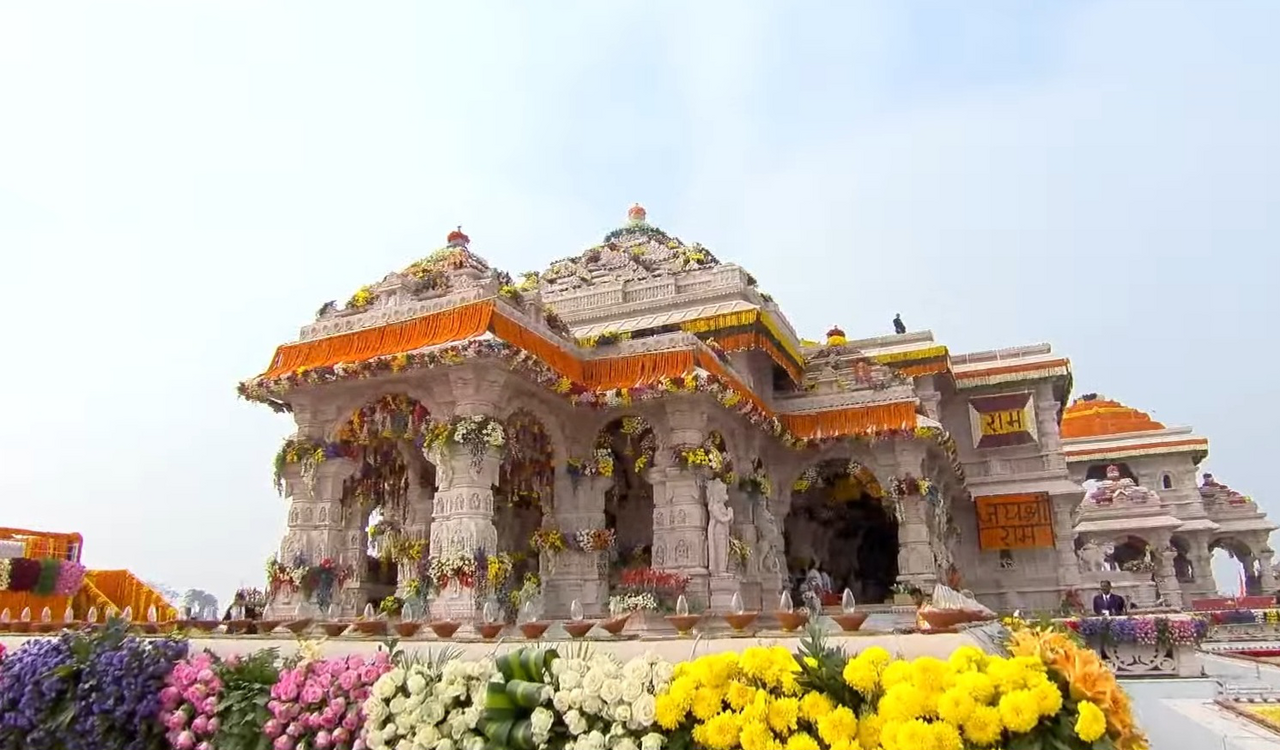
Shri Ram Janmabhoomi Mandir, Ayodhya
The temple at the birthplace of Shri Ram in Ayodhya: its story, architecture, the idol of Ram Lalla, how darshan works and practical tips for visitors.
Mani Parvat: The Hill of Jewels
Mani Parvat is a small hill in Ayodhya linked with Hanuman's Sanjeevani mountain and King Janaka's gift of jewels. Where the Sawan swing festival begins.

Suraj Kund: The Pond of the Sun
Suraj Kund at Darshan Nagar near Ayodhya is an old stepped pond and Sun temple linked with the Suryavanshi kings, the solar ancestors of Shri Ram.
Ram Navami in Ayodhya: Birthday of Shri Ram
Ram Navami, the birth festival of Shri Ram on Chaitra Shukla Navami: its meaning, how Ayodhya celebrates at noon, the Surya Tilak, and crowd planning.
Kartik Parikrama: Walking Around Ayodhya
The Chaudah Kosi and Panch Kosi Parikrama and Kartik Purnima bath in Ayodhya: routes, dates, meaning and how to prepare for the long barefoot walk.

Vivah Panchami: Wedding of Ram and Sita
Vivah Panchami marks the wedding of Shri Ram and Sita on Margashirsha Shukla Panchami. How Ayodhya celebrates with the Ram Barat, and what it means.