
Temple Etiquette in Ayodhya for First-Time Visitors
What to wear, where to leave your shoes, what darshan, prasad and aarti mean, when not to take photographs, and how to behave in Ayodhya's temples.
You are welcome
The temples described on this website receive visitors of every background, and no one will expect you to know every custom. What people notice and appreciate is respect. If you are unsure, watch what those around you do, or ask; people in Ayodhya are generous with help.
A few words you will hear
- Darshan means "seeing". It is the heart of a temple visit: you stand before the deity, look, and are understood to be seen in return. It may last only a few seconds in a crowd.
- Prasad is food, usually a sweet, that has been offered to the deity and is given back to worshippers as a blessing. Receive it in your right hand and eat it or carry it away; do not leave it on the ground.
- Aarti is the offering of lamps with singing and bells, performed at set times of day. The evening aarti on the Saryu is the easiest to attend.
- Parikrama is walking clockwise around a shrine, keeping it on your right.
- Charanamrit is a spoonful of sanctified water poured into the palm; sip it or touch it to your head.
What to wear
Wear loose, modest clothing that covers the shoulders and knees. For women, a long skirt or trousers with a tunic and a scarf is ideal; for men, trousers and a shirt. Indian dress is welcomed but not required. Avoid sleeveless tops, shorts and tight clothing. Leather items such as belts and wallets cannot be taken into Shri Ram Janmabhoomi Mandir.
Shoes
Footwear comes off before you enter any temple. Use the shoe stands near the entrance and keep the token. Wear sandals or shoes that slip on and off easily, and socks if you find stone floors too hot in summer or too cold in winter.
Inside the temple
- Wash your hands, and feet if a tap is provided.
- Move with the queue and do not push forward.
- Fold your hands in namaste. You may bow or touch the threshold if you wish, but you need not.
- Do not point your feet towards the deity when sitting, and do not turn your back to the sanctum at close range.
- Keep your voice low and your phone silent.
- Offerings of flowers or sweets are welcome but entirely optional.
Photography
Do not photograph inside sanctums unless a sign clearly allows it, and never photograph people at prayer without asking. At Shri Ram Janmabhoomi Mandir phones and cameras are not allowed at all and must be left at the lockers. Ghats, courtyards and streets are generally fine. Ask before photographing sadhus; some will expect a small offering.
Money
Darshan is free. Donation boxes are provided if you wish to give; put money there, or at an official counter where a receipt is issued. You are under no obligation to pay anyone who puts a thread on your wrist, a mark on your forehead or a garland round your neck uninvited; a polite "nahin, dhanyavaad" is enough.
Food, drink and other habits
The temple town is vegetarian and alcohol-free. Do not smoke near temples or ghats. Eat and pass things with the right hand. Public displays of affection are out of place here.
Monkeys
There are many monkeys around Hanuman Garhi. Do not feed or tease them, keep food and prasad inside a bag, and hold glasses and phones firmly.
At the river
Bathing in the Saryu is an act of worship. Bathe modestly dressed, use the changing areas, and do not use soap in the river. Read the safety notes on the Saryu Ghat page first.
A greeting to learn
In Ayodhya people greet one another with "Jai Shri Ram" or "Jai Siya Ram". Returning it with folded hands will earn you a smile anywhere in the city.
More for overseas visitors: Visiting Ayodhya from abroad. To understand what you are seeing, read the story of the Ramayana before you come.
Timings, entry rules, routes and prices change, especially on festival days. Please confirm with the temple, the district administration or the provider before you travel.
Last updated:
Read next
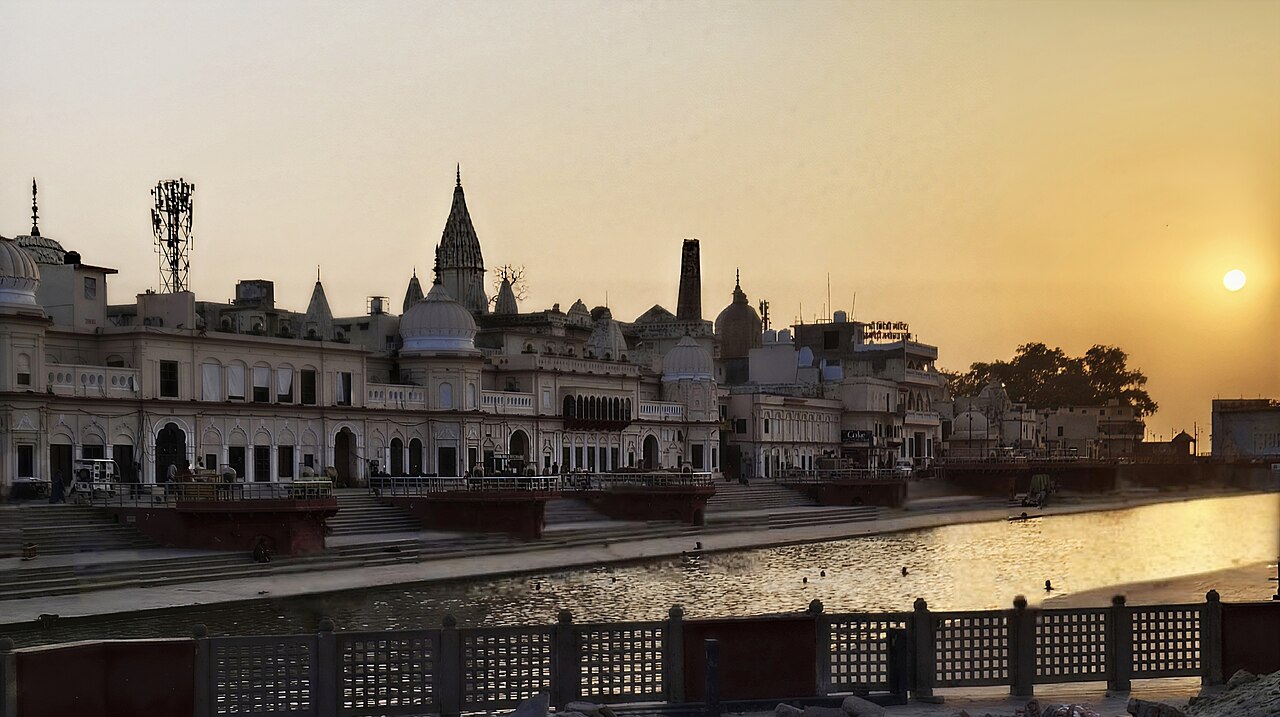
Ram ki Paidi: The Ghats of a Million Lamps
Ram ki Paidi is the long line of bathing ghats beside the Saryu in Ayodhya, home of the Deepotsav lamp festival. What to see and the best time to go.
Mani Parvat: The Hill of Jewels
Mani Parvat is a small hill in Ayodhya linked with Hanuman's Sanjeevani mountain and King Janaka's gift of jewels. Where the Sawan swing festival begins.

Tulsi Smarak Bhawan: Memorial to Tulsidas
Tulsi Smarak Bhawan in Ayodhya honours Goswami Tulsidas, author of the Ramcharitmanas, with a research institute, Ramlila and a Ram Katha museum.

Ram Navami in Ayodhya: Birthday of Shri Ram
Ram Navami, the birth festival of Shri Ram on Chaitra Shukla Navami: its meaning, how Ayodhya celebrates at noon, the Surya Tilak, and crowd planning.
Kartik Parikrama: Walking Around Ayodhya
The Chaudah Kosi and Panch Kosi Parikrama and Kartik Purnima bath in Ayodhya: routes, dates, meaning and how to prepare for the long barefoot walk.
Vivah Panchami: Wedding of Ram and Sita
Vivah Panchami marks the wedding of Shri Ram and Sita on Margashirsha Shukla Panchami. How Ayodhya celebrates with the Ram Barat, and what it means.