
Ayodhya, Varanasi and Prayagraj: A Five-Day Circuit
A practical five-day plan linking Ayodhya with Varanasi and Prayagraj, with road distances, what to see in each city and optional add-ons such as Lucknow.
Why these three cities
Ayodhya, Varanasi and Prayagraj lie in a triangle in eastern Uttar Pradesh, each a few hours from the others. Together they hold much of what a first visit to sacred north India is about: the birthplace of Shri Ram on the Saryu, the city of Shiva on the Ganga, and the meeting of the Ganga and Yamuna where Ram himself stopped on his way into exile. Distances here are approximate road distances.
Day 1: arrive in Ayodhya
Fly or take a train to Ayodhya, or drive from Lucknow. Settle in, then spend the evening on the riverfront: Lata Mangeshkar Chowk, Ram ki Paidi and the aarti at Saryu Ghat.
Day 2: Ayodhya
Follow the traditional order described in Ayodhya in one day: the Saryu at sunrise, Hanuman Garhi, Shri Ram Janmabhoomi Mandir, Kanak Bhawan and Dashrath Mahal. If you have energy in the afternoon, drive out to Bharat Kund at Nandigram.
Day 3: to Varanasi
Leave after breakfast; the drive takes roughly four to five hours. Varanasi, also called Kashi and Banaras, is among the oldest living cities in the world. In the evening watch the Ganga aarti at Dashashwamedh Ghat, ideally from a boat.
Day 4: Varanasi and Sarnath
Take a boat along the ghats at dawn, then visit the Kashi Vishwanath temple. In the afternoon go to Sarnath, about 10 km away, where the Buddha gave his first teaching. Varanasi also has its own Ram connection: Tulsidas lived and wrote here, and the Sankat Mochan Hanuman temple is linked with him.
Day 5: Prayagraj, and onward
Drive to Prayagraj, about two and a half to three hours. Take a boat to the Triveni Sangam, the confluence of the Ganga and Yamuna with the unseen Saraswati. Here stood the ashram of the sage Bharadwaja, where Ram, Sita and Lakshmana halted on the way to Chitrakoot and again on their return; the story is in the Ramayana katha. From Prayagraj you can fly or take a train onward, or return to Ayodhya or Lucknow.
Ways to extend it
- Lucknow, for Awadhi food and architecture, at the start or end.
- Chitrakoot, about 130 km from Prayagraj, where Ram spent the first part of his exile and where Bharata came to meet him; see Bharat Milap.
- Shringverpur, on the Ganga near Prayagraj, remembered as the place where Guha received Ram.
- Gorakhpur and Kushinagar, north-east of Ayodhya, for the Buddhist circuit.
Practical notes
- A car with a driver for all five days is the simplest way to do this, and costs are shared easily in a family group. Fix the full itinerary, tolls, parking and the driver's allowance in writing.
- Trains link all three cities and are comfortable if booked in advance.
- Avoid the dates of major festivals and of the Kumbh and Magh melas in Prayagraj unless those are your purpose; crowds and prices rise sharply.
- In winter, fog can delay road and rail travel in the morning. Do not plan tight connections.
To have the whole circuit arranged with a guide who can explain each place, request a guided tour. Overseas visitors should also read Visiting Ayodhya from abroad.
Timings, entry rules, routes and prices change, especially on festival days. Please confirm with the temple, the district administration or the provider before you travel.
Last updated:
Read next
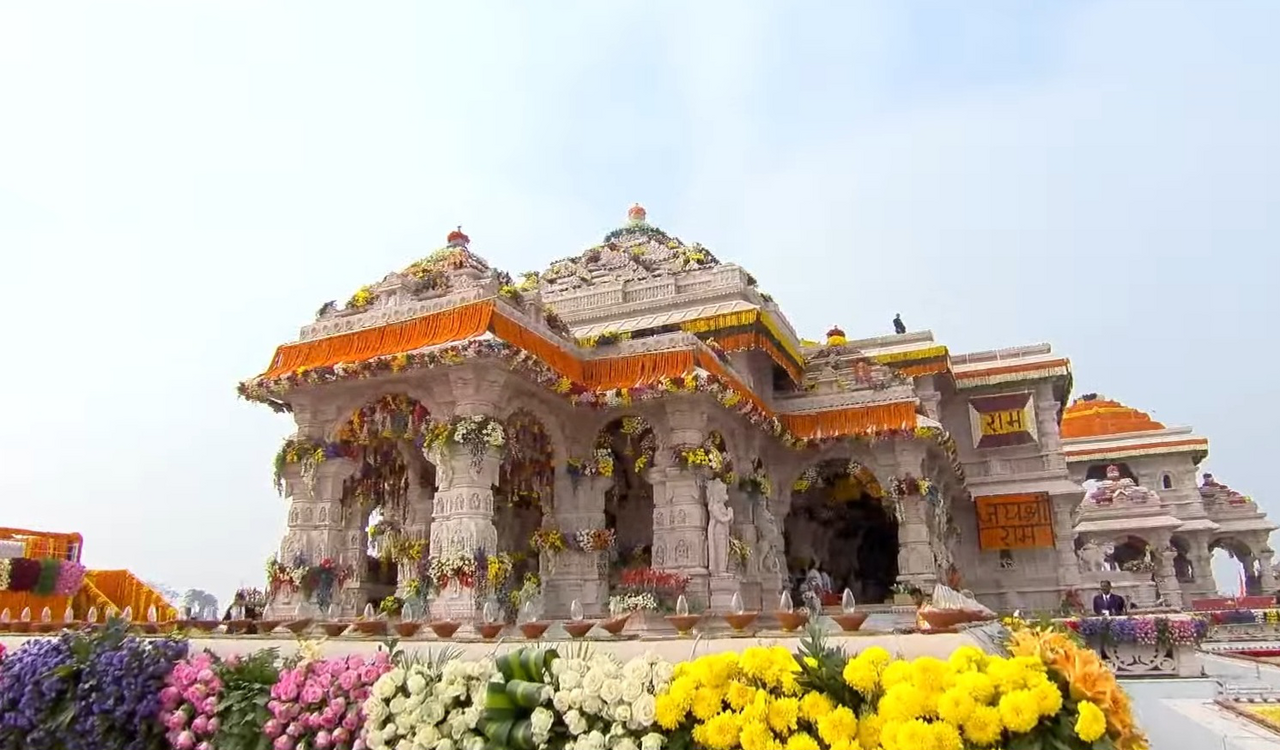
Shri Ram Janmabhoomi Mandir, Ayodhya
The temple at the birthplace of Shri Ram in Ayodhya: its story, architecture, the idol of Ram Lalla, how darshan works and practical tips for visitors.
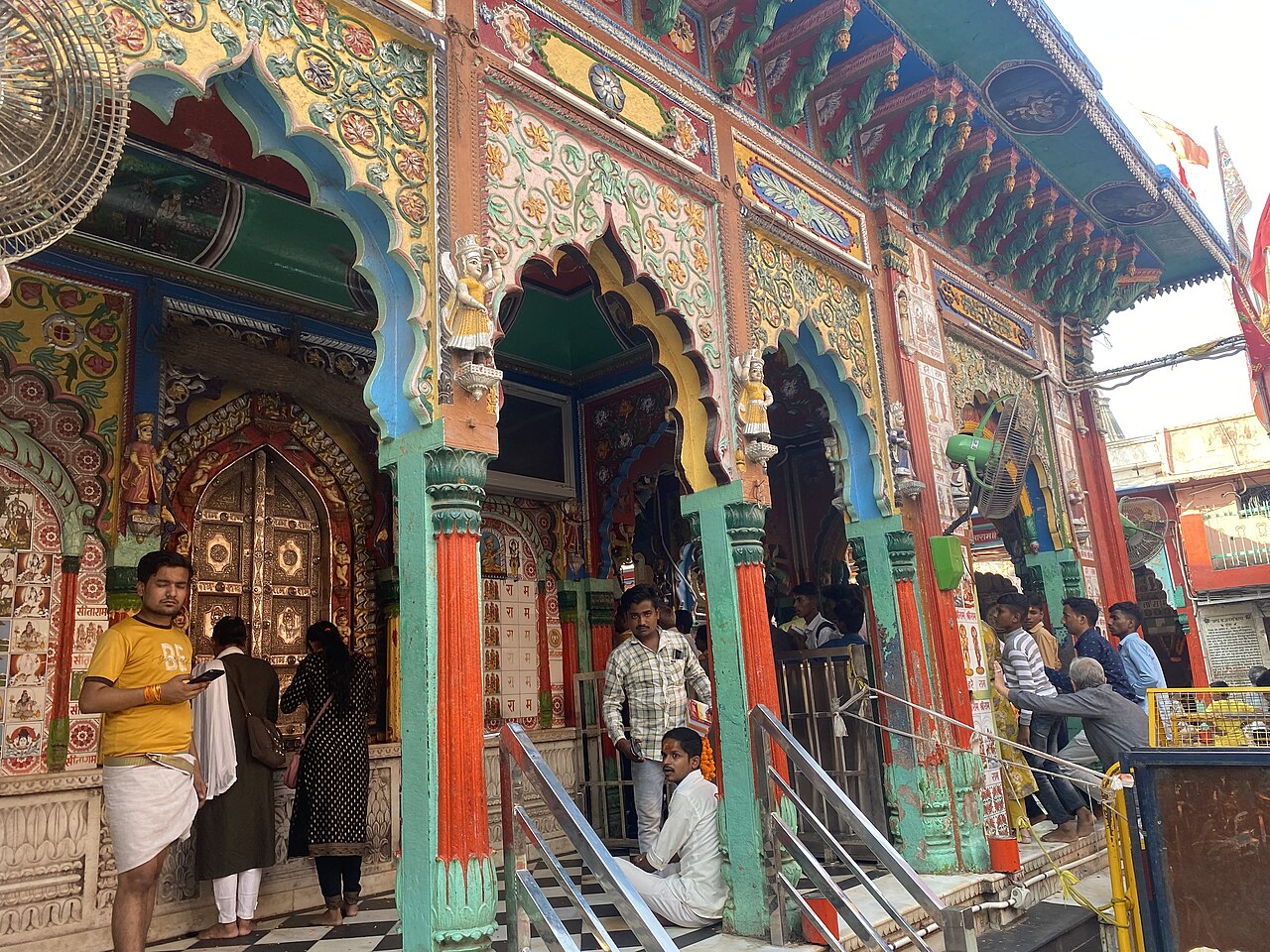
Hanuman Garhi: The Guardian of Ayodhya
Hanuman Garhi, the hilltop fort-temple of Hanuman in Ayodhya: why pilgrims visit it before Ram Mandir, its 76 steps, its story and tips for darshan.
Nageshwarnath Temple: Founded by Kush
Nageshwarnath, the Shiva temple at Ram ki Paidi in Ayodhya, is said to have been founded by Kush, son of Shri Ram. The legend of the lost armlet.

Deepotsav Ayodhya: The Festival of Lamps
Deepotsav in Ayodhya, on the eve of Diwali, relives the return of Shri Ram with millions of lamps at Ram ki Paidi. Meaning, programme and how to attend.
Sawan Jhula Mela: The Swing Festival
The Sawan Jhula Mela of Ayodhya: in the monsoon month of Shravan, Ram and Sita are placed on decorated swings in temples across the city for a fortnight.

Vivah Panchami: Wedding of Ram and Sita
Vivah Panchami marks the wedding of Shri Ram and Sita on Margashirsha Shukla Panchami. How Ayodhya celebrates with the Ram Barat, and what it means.