
Hanuman Garhi: The Guardian of Ayodhya
Hanuman Garhi, the hilltop fort-temple of Hanuman in Ayodhya: why pilgrims visit it before Ram Mandir, its 76 steps, its story and tips for darshan.
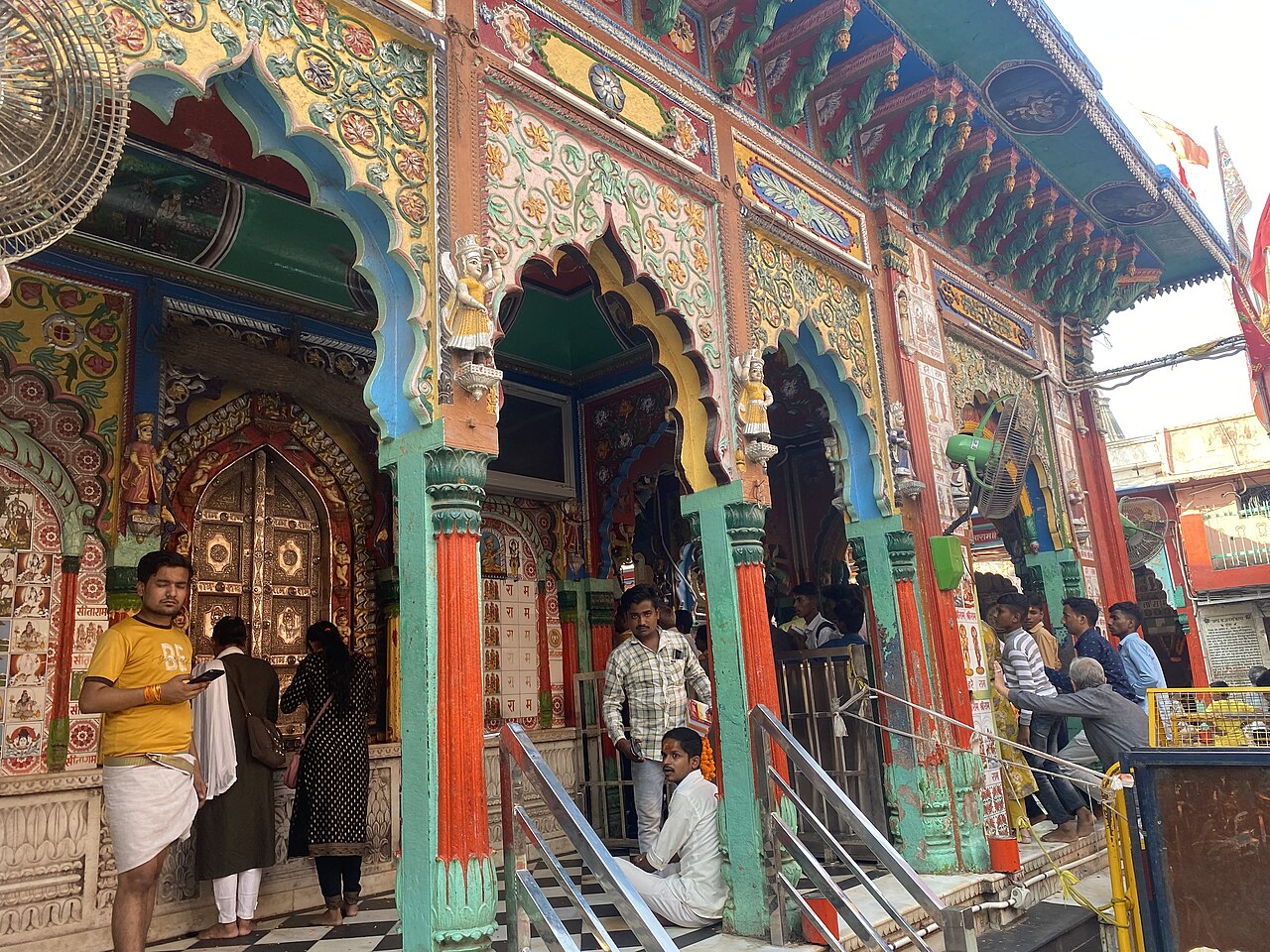
The story
When Shri Ram was about to leave the world, tradition says, he entrusted Ayodhya to Hanuman and asked him to stay and guard it. Hanuman is therefore the kotwal, the guardian, of the city, and Hanuman Garhi is his seat: a temple built like a small fort (garhi) on a mound in the middle of the old town, from which he is believed to keep watch over the Janmabhoomi.
The logic of the custom
Pilgrims go to Hanuman Garhi before Shri Ram Janmabhoomi Mandir. The reasoning is the same as calling on the gatekeeper before entering a house: one asks the guardian's leave to see the Lord. It also reflects a belief that runs through the Ramayana, that the way to Ram is through his devotee. Tulsidas puts it in the Hanuman Chalisa: you guard Ram's door, and none enters without your leave.
What you will see
Seventy-six steps lead up to a walled enclosure with round bastions at its corners. In the main shrine is a small image of the child Hanuman seated in the lap of his mother Anjani, covered in garlands. The temple is in the care of an old order of Ramanandi sadhus. The present structure dates from the eighteenth century, and tradition credits a Nawab of Awadh with granting land and support for it after a prayer was answered, a reminder of the shared history of this region. From the top there is a wide view over Ayodhya.
Tips for darshan
- Tuesdays and Saturdays are Hanuman's days and are very crowded; go early in the morning.
- The steps are steep. Elders may prefer to go slowly with a hand on the rail; ask the temple staff about assistance.
- Besan laddoos are the traditional offering and are sold in the lane below. Buy from a shop that shows prices.
- Watch your belongings and footwear in the crowded lane, and be careful of monkeys if you are carrying prasad in your hand.
Many visitors recite the Hanuman Chalisa or the Sundara Kanda here. Next, walk to Dashrath Mahal and Kanak Bhawan. Related reading: Humility and service.
Timings, entry rules, routes and prices change, especially on festival days. Please confirm with the temple, the district administration or the provider before you travel.
Last updated:
Read next

How to Reach Ayodhya by Air, Train and Road
Reaching Ayodhya: the airport, the two railway stations, road distances from Lucknow, Varanasi, Prayagraj and Gorakhpur, and getting around the city.
Ayodhya Two-Day Itinerary
Two unhurried days in Ayodhya: the main temples and Saryu aarti on day one; Guptar Ghat, Nandigram, Suraj Kund and Mani Parvat on day two.
Ayodhya, Varanasi and Prayagraj: A Five-Day Circuit
A practical five-day plan linking Ayodhya with Varanasi and Prayagraj, with road distances, what to see in each city and optional add-ons such as Lucknow.

Ram Navami in Ayodhya: Birthday of Shri Ram
Ram Navami, the birth festival of Shri Ram on Chaitra Shukla Navami: its meaning, how Ayodhya celebrates at noon, the Surya Tilak, and crowd planning.
Sawan Jhula Mela: The Swing Festival
The Sawan Jhula Mela of Ayodhya: in the monsoon month of Shravan, Ram and Sita are placed on decorated swings in temples across the city for a fortnight.

Vivah Panchami: Wedding of Ram and Sita
Vivah Panchami marks the wedding of Shri Ram and Sita on Margashirsha Shukla Panchami. How Ayodhya celebrates with the Ram Barat, and what it means.