
Kanak Bhawan: The Palace of Sita and Ram
Kanak Bhawan in Ayodhya is remembered as the golden palace Kaikeyi gave to Sita as a bride. Its story, its gold-crowned idols and how to visit.
The story
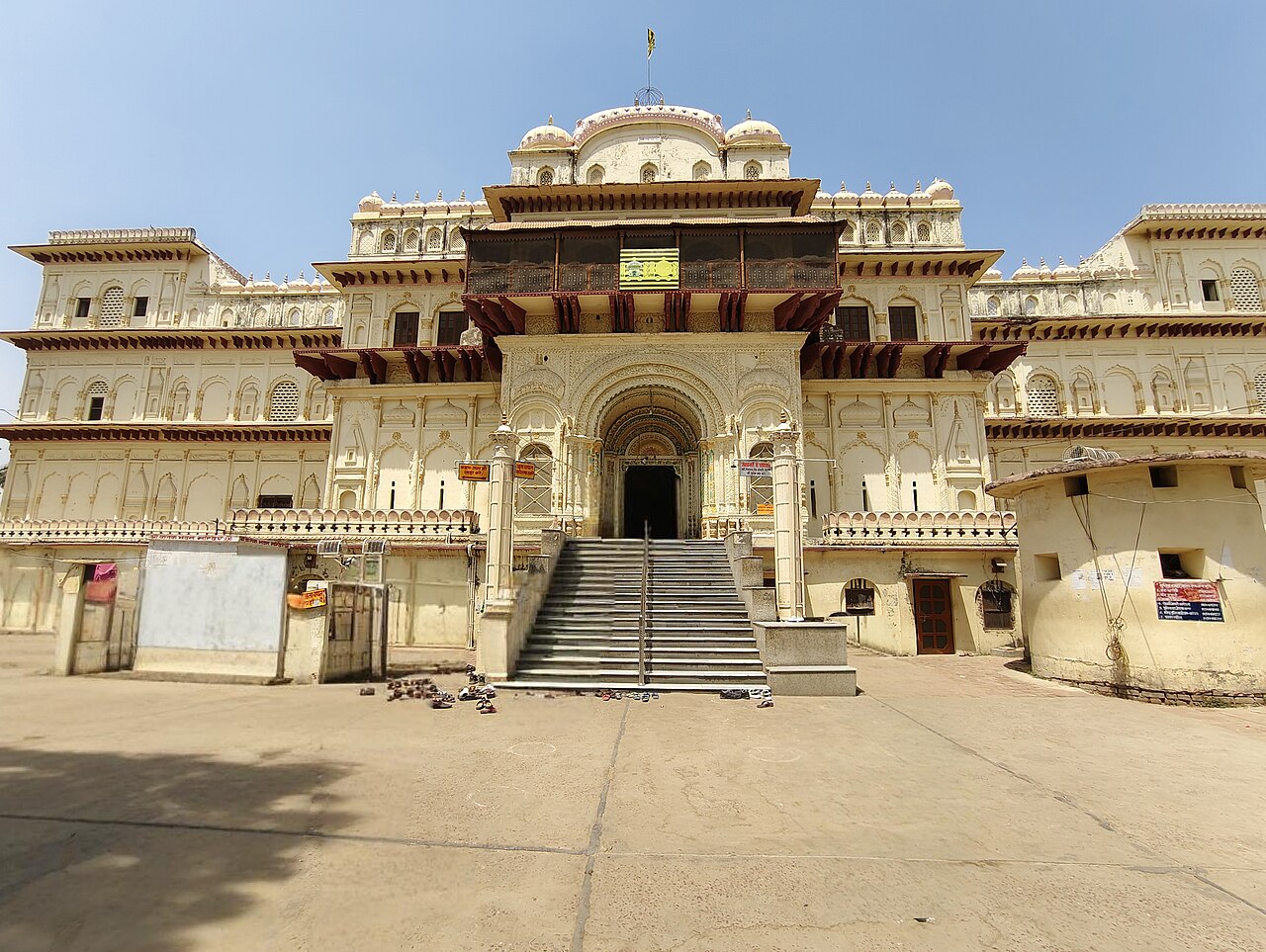
Kanak means gold. When Sita arrived in Ayodhya as Ram's bride, tradition says, Queen Kaikeyi presented her with a palace of gold as her "muh dikhai", the gift a mother-in-law gives on first seeing the bride's face. Kanak Bhawan stands where that palace is believed to have stood. It was the private home of Ram and Sita, and devotees still regard it as her house; here Ram is the husband and son-in-law, and the mood is tender rather than royal.
There is a quiet irony that pilgrims often remark on. The same Kaikeyi who gave Sita a golden palace later sent her to the forest. The Ramayana does not let one act cancel the other; see the Ayodhya Kanda and Respect for parents and teachers.
History of the building
Tradition holds that the palace was rebuilt several times over the ages, by Kush, by King Vikramaditya and by others. The temple seen today was built in 1891 by Maharani Vrishbhanu Kunwari of Orchha and Tikamgarh in Bundelkhand, and its architecture, with arched galleries around a large open courtyard, resembles a Bundela palace more than a typical temple.
What you will see
The sanctum holds three pairs of idols of Ram and Sita of different sizes, wearing gold crowns. The courtyard often has devotees singing bhajans, and in the month of Sawan the deities are placed on swings during the Jhula festival. The evening lighting is beautiful.
Tips for visiting
- It is a short walk from Hanuman Garhi and Dashrath Mahal; most pilgrims see the three together.
- The temple closes for some hours in the middle of the day, as most temples in Ayodhya do. Plan for morning or evening.
- Sit for a few minutes in the courtyard; it is one of the calmer places in the old town.
Next: Shri Ram Janmabhoomi Mandir or Sita ki Rasoi.
Timings, entry rules, routes and prices change, especially on festival days. Please confirm with the temple, the district administration or the provider before you travel.
Last updated:
Read next
Ram Mandir Darshan Guide: Step by Step
How darshan at Shri Ram Janmabhoomi Mandir in Ayodhya works: entry, lockers, what not to carry, the queue, aarti passes, dress, elders and common scams.
Temple Etiquette in Ayodhya for First-Time Visitors
What to wear, where to leave your shoes, what darshan, prasad and aarti mean, when not to take photographs, and how to behave in Ayodhya's temples.
Ayodhya, Varanasi and Prayagraj: A Five-Day Circuit
A practical five-day plan linking Ayodhya with Varanasi and Prayagraj, with road distances, what to see in each city and optional add-ons such as Lucknow.

Ram Navami in Ayodhya: Birthday of Shri Ram
Ram Navami, the birth festival of Shri Ram on Chaitra Shukla Navami: its meaning, how Ayodhya celebrates at noon, the Surya Tilak, and crowd planning.
Sawan Jhula Mela: The Swing Festival
The Sawan Jhula Mela of Ayodhya: in the monsoon month of Shravan, Ram and Sita are placed on decorated swings in temples across the city for a fortnight.
Kartik Parikrama: Walking Around Ayodhya
The Chaudah Kosi and Panch Kosi Parikrama and Kartik Purnima bath in Ayodhya: routes, dates, meaning and how to prepare for the long barefoot walk.