
Mani Parvat: The Hill of Jewels
Mani Parvat is a small hill in Ayodhya linked with Hanuman's Sanjeevani mountain and King Janaka's gift of jewels. Where the Sawan swing festival begins.
The stories
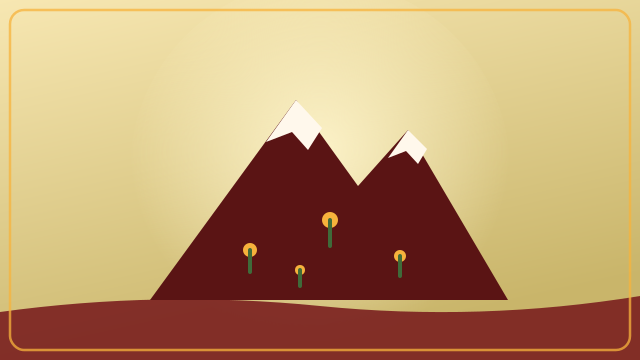
Mani Parvat is a mound about 65 feet high in the Kami Ganj area of Ayodhya, topped by a small temple and reached by a flight of steps. Two stories explain it, and pilgrims are fond of both.
The first comes from the Yuddha Kanda. When Lakshmana lay wounded in Lanka, Hanuman flew to the Himalayas for the Sanjeevani herb and brought back the whole mountain. As he passed over Ayodhya on his way south, a piece of it fell here. A related tale adds that Bharata, seeing a huge figure in the night sky and fearing a demon, brought him down with a blunt arrow at Nandigram; on learning the truth he offered to send Hanuman onward on the tip of his own arrow.
The second story is gentler. When Sita was married, King Janaka sent so many jewels (mani) to Ayodhya as her dowry that, heaped together, they made a hill.
The swing festival
On the third day of the bright half of Sawan, in the monsoon, images of Ram and Sita from the temples of Ayodhya are brought in procession to Mani Parvat and placed on swings hung from the trees. This opens the Sawan Jhula Mela; afterwards the deities return and are swung in their own temples for the rest of the fortnight.
A layered site
Archaeologists have long taken an interest in this mound and in the nearby Sugriva Parvat, and some regard them as the remains of ancient structures, possibly Buddhist stupas, from the time when Ayodhya, also known as Saket, was a centre of several faiths. The site is a good reminder that this city has been sacred to many traditions for well over two thousand years.
Visiting
- Climb for the view: the top looks out over the trees and rooftops of Ayodhya.
- The steps are uneven; wear footwear with grip and go in daylight.
- It is a little away from the Ramkot temples, so take an e-rickshaw. It fits well into the second day of the two-day itinerary.
Nearby places: Tulsi Smarak Bhawan and Dashrath Mahal.
Timings, entry rules, routes and prices change, especially on festival days. Please confirm with the temple, the district administration or the provider before you travel.
Last updated:
Read next

Best Time to Visit Ayodhya: Month by Month
When to visit Ayodhya: weather in each season, festival dates that bring huge crowds, fog and heat warnings, and the calmest weeks for darshan.
Safety Tips for Pilgrims in Ayodhya
Staying safe in Ayodhya: crowds, lost family members, river bathing, heat and cold, food and water, transport fares, online fraud and who to call.
Ayodhya, Varanasi and Prayagraj: A Five-Day Circuit
A practical five-day plan linking Ayodhya with Varanasi and Prayagraj, with road distances, what to see in each city and optional add-ons such as Lucknow.
Deepotsav Ayodhya: The Festival of Lamps
Deepotsav in Ayodhya, on the eve of Diwali, relives the return of Shri Ram with millions of lamps at Ram ki Paidi. Meaning, programme and how to attend.
Sawan Jhula Mela: The Swing Festival
The Sawan Jhula Mela of Ayodhya: in the monsoon month of Shravan, Ram and Sita are placed on decorated swings in temples across the city for a fortnight.

Vivah Panchami: Wedding of Ram and Sita
Vivah Panchami marks the wedding of Shri Ram and Sita on Margashirsha Shukla Panchami. How Ayodhya celebrates with the Ram Barat, and what it means.